
AI for the physical world.
The Computational Design and Fabrication Group at MIT CSAIL develops AI that can represent, simulate, design, and build the physical world, from molecules and materials to machines and robots.
Led by Wojciech Matusik, Cadence Design Systems Professor of Electrical Engineering and Computer Science, with a joint appointment in Mechanical Engineering.
Research
Open problems
Three questions drive the group today. Each one is open, funded, and taking new students.
01
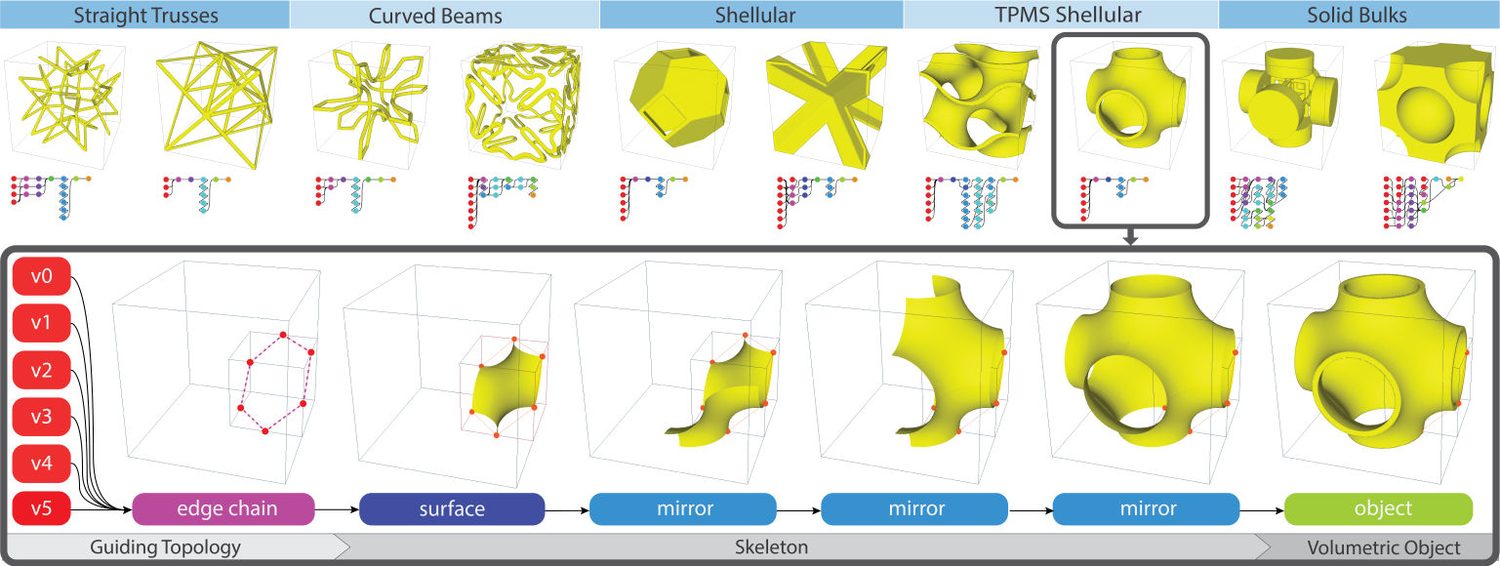
Domain-specific languages for design
Programs, not pixels. We build design languages that a machine can write and a solver can check, so that a generated artifact is correct by construction rather than plausible by appearance.
02
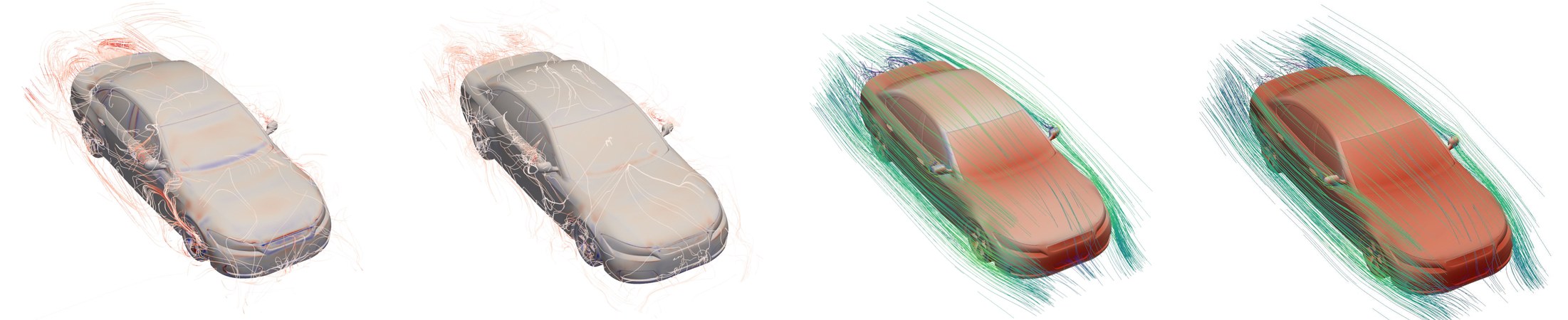
Neural physics surrogates
Learned simulators that preserve physical structure and can be checked against a classical solver. The aim is models that replace or accelerate those solvers without discarding the constraints and invariants that make them trustworthy.
03
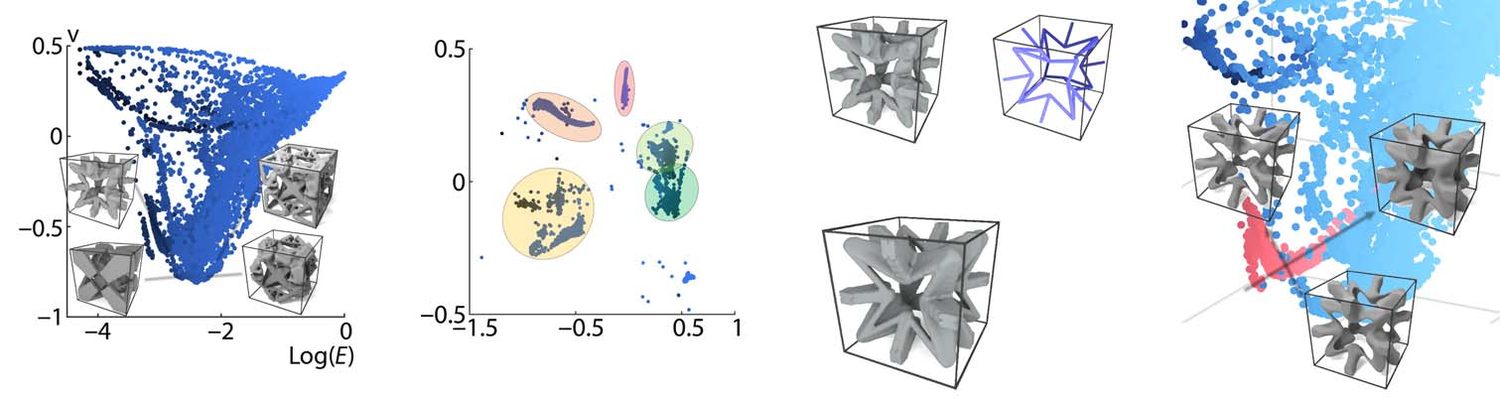
AI for scientific discovery
Closing the loop from hypothesis to experiment. Discovery systems that propose candidates, run them on real instruments, and learn from what actually came back.
People
The group







Faculty
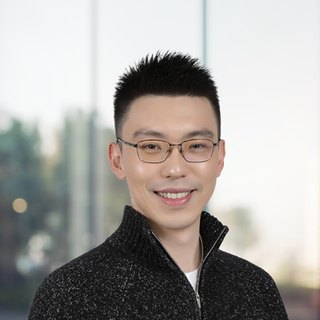
Wojciech Matusik
Staff
Debbie Goodwin
Postdocs
Ben Jones · Liane Makatura · Crystal Owens · Haixu Wu
PhD students
Zhiyang (Frank) Dou · Minghao Guo · Alston Lo · Jamison Meindl · Michael Sun
Master's and MEng students
Steven Rayes · Ray Song · Sarah Zhang
Undergraduates
Michal Lipiec
Alumni hold faculty posts at
Arkansas, Bonn, Brown, Carnegie Mellon, Chulalongkorn, Georgia Tech, KAIST, Kyung Hee, MIT, NUS, Simon Fraser, Texas A&M, Tokyo, Toronto, Tsinghua, TU Delft, UBC, USI Lugano, Washington.
Others build at
OpenAI, Meta, NVIDIA, Tesla, Amazon, Google, Databricks, Inkbit, Lila Sciences, and companies founded out of the group.
Publications
Selected work
The three papers that appeared in Nature, and the three the field went back and singled out afterwards.


 3.9M views
ACM Trans. Graph. 2013SIGGRAPH Seminal Paper
Computational design of mechanical characters

Commun. ACM 2019CACM Research Highlight
OpenFab: a programmable pipeline for multimaterial fabrication
Recently recognized NeuralActuator, Outstanding Systems Paper, RSS 2026 · Fabrica, Best Paper, CoRL 2025 · TelePulse, Best Paper, ACM CHI 2025
All publications, with PDFs, DOIs and BibTeX · The MERL BRDF database
News
Recent
-
2026-08-10
With a feel for physics, AI models simulate a wider range of real-world scenarios
"GeoPT" helps AI models understand the basics of physics so they can simulate how objects respond to things like wind and water more efficiently...
-
2026-07-17
NeuralActuator receives the Outstanding Systems Paper in Memory of Seth Teller
NeuralActuator: Neural Actuation Modeling for Robot Dynamics and External Force Perception received the Outstanding Systems Paper in Memory of...
-
2026-05-01
Congratulations to Dr. Yifei Li
Yifei Li's doctoral degree was conferred in May 2026, for the thesis From Visual Computing to Physical AI: Simulation, Optimization, and Learning...
-
2026-05-01
Congratulations to Dr. Liane Makatura
Liane Makatura's doctoral degree was conferred in May 2026, for the thesis Unified Representation, Design, and Exploration of High-Performance...